
Farm a small vineyard, with sheep and poultry in the rows.
How to farm a small vineyard is the crash course I wrote before I could judge a farm with a vineyard on it: the vine's year, what can go wrong, the money, and how animals fit in without hurting the crop.
- Format
- Web and PDF
- Pages
- 31
- Sources
- 153, linked
- Cost
- Free
- Checked
- Oct 2026

Get the free guide
Check your inbox
It has your guide, and it points you to our other free guides. It comes from Venturopoly Farms. If it isn't there soon, look in spam or promotions, and move it to your inbox so the next ones land there too.
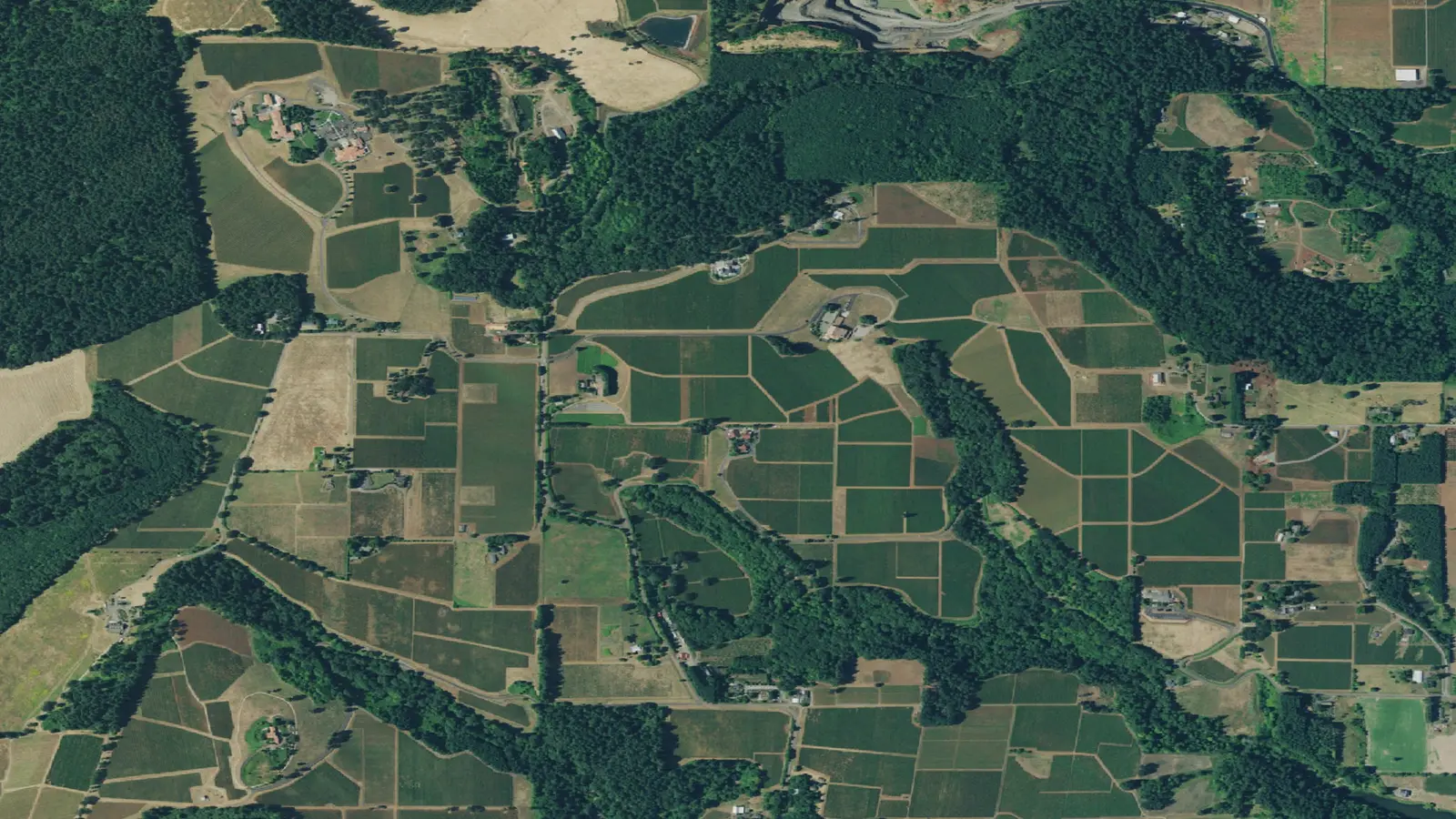
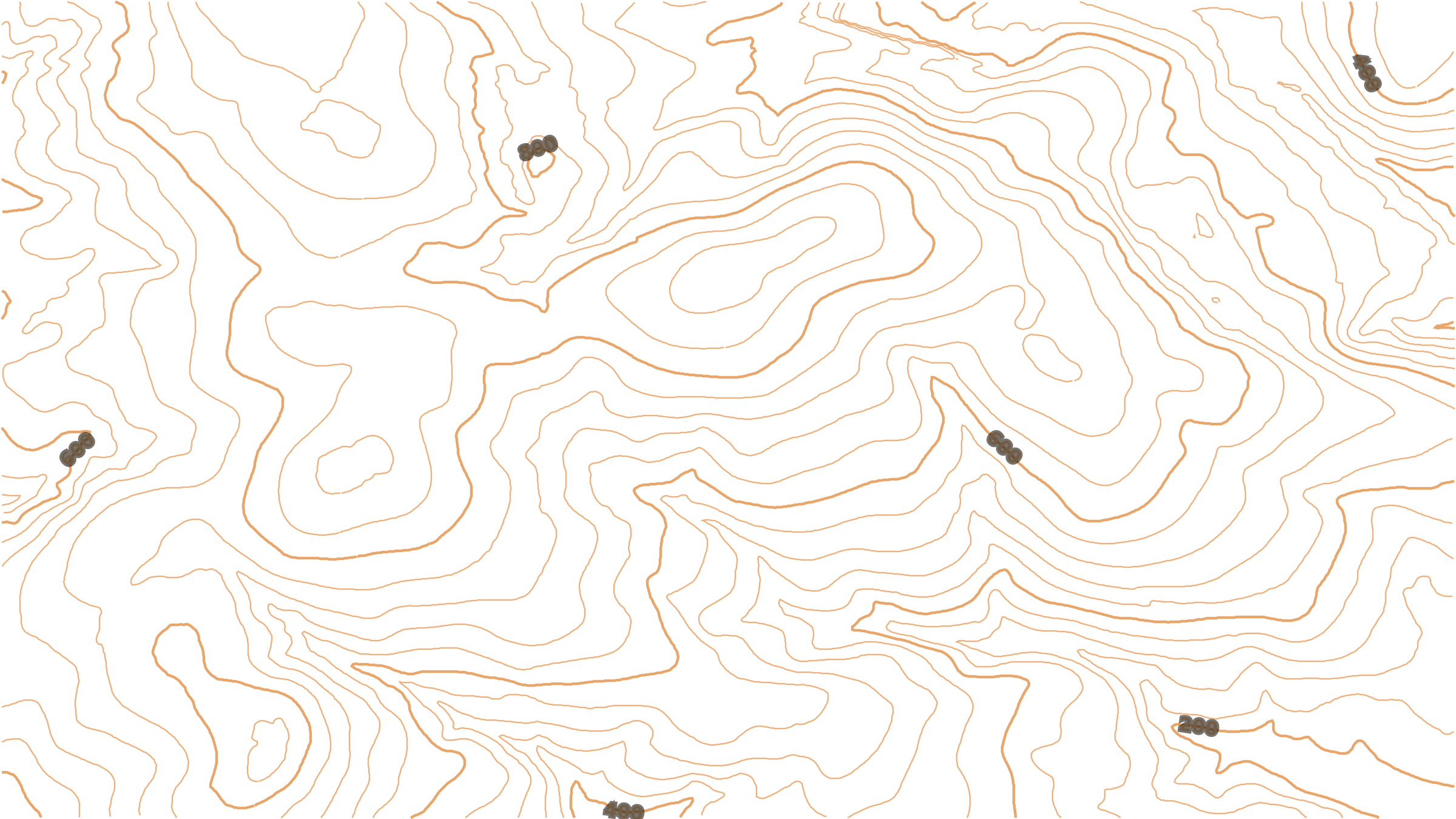
Map layers. Each button shows or hides its layer.
Why I wrote it
One of the best farms I looked at this year came with a vineyard. A vineyard runs on its own calendar, with its own words and its own risks, so before I could judge one I wrote myself a crash course: the vine's year, the diseases, the cellar, the money, and how animals fit in without hurting the crop.
This guide is that crash course, rewritten for a small vineyard anywhere. My research started with Pinot noir in Oregon's Willamette Valley, so many of the numbers are Oregon's, and they're labelled. The vine works the same way in Italy, Argentina, or California, and where the climate or the rules change, the guide says so.
A vineyard fits a small grazing farm better than most people think. Sheep can graze the rows from harvest to budbreak, poultry can work them in summer, and the manure, the compost, and the grape skins go back to the soil. Biodynamic growers call that the farm as one organism. Parts of that philosophy have no scientific support, so the guide keeps the practice and the evidence side by side.
What you'll find in it
- Part 1 The vineyard and cellar words, from clone and rootstock to custom crush, and why each one matters.
- Part 2 The vine's year, month by month: what the vine is doing, the grower's work, the biodynamic rhythm, and where the animals go.
- Part 3 Biodynamics: the nine preparations, the growers who set the standard, and what the science says.
- Part 4 When sheep, chickens, ducks, and turkeys fit, why goats never do, and the rules that keep the vines safe.
- Part 4 8 farms that run animals in their rows, from Oregon and California to New Zealand and South Africa.
- Part 4 Why sheep are the most copper-sensitive livestock, and what that means where growers spray copper.
- Part 5 Pruning by the moon: the four rhythms, what the planting calendars say about vines, and what the science says.
- Part 6 Phylloxera, viruses, the spray year, and the years that go wrong, like the April frost that damaged about 75 percent of one vineyard's primary buds.
- Part 7 Dry farming, the cover crop, and how the climate and the rules change from Oregon to Italy, Argentina, or California.
- Part 8 Three wines from one vineyard, and how many bottles an acre makes: about 150 cases at 2.5 tons.
- Part 9 Five ways an acre earns, what a year of farming costs, and why 48 percent of Oregon growers sold below cost in 2025.
- Part 9 Cash lease, management agreement, crop share, or lease-to-own: who carries the risk when you farm someone else's vines.
- Part 10 What to look at in the rows, and the questions worth asking, before you take on a vineyard.
- Part 11 Where to start reading, and how to spend your first season.
A look inside
Three of the 31 pages, as they print. The web version has the same text, with every source linked.
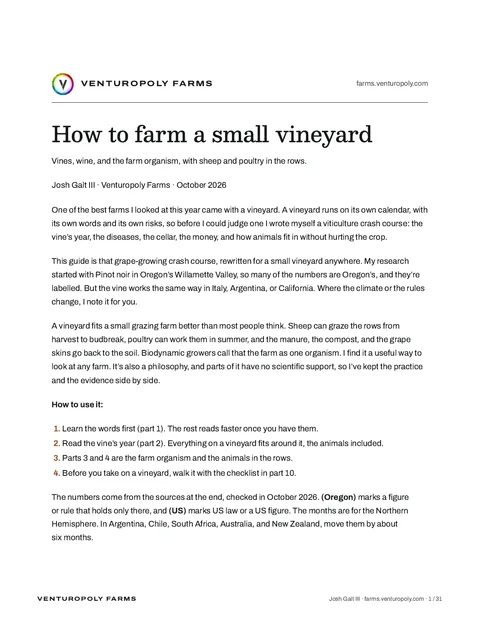
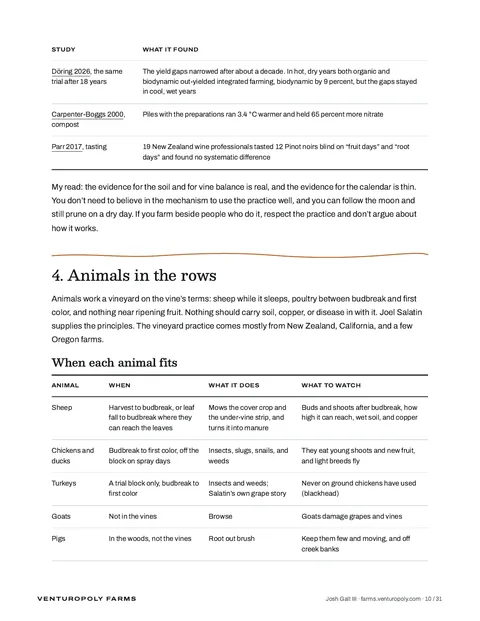
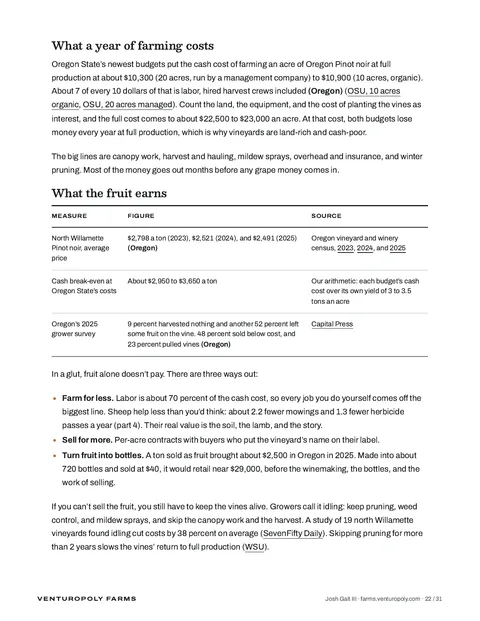
From the guide: the vine's year
The vine sets the calendar, and everything else fits around it. Sheep graze only while it sleeps, and poultry work the rows between budbreak and first color. The months are for a cool-climate vineyard in the Northern Hemisphere. In the Southern Hemisphere, move them by about six months.
| When | The vine | The animals |
|---|---|---|
| Late October to November | The leaves refill the roots, then fall | Poultry clean up after the last pick. Sheep come in after harvest, or after leaf fall where they can reach the leaves |
| December to February | Dormant: pruning season | Sheep graze the row middles and the strip under the vines |
| March | Sap rises and the buds swell | The sheep's last passes: graze the cover down short |
| April | Budbreak | Sheep out of the vines and onto pasture |
| May | Fast shoot growth | Poultry on pasture beside the vines |
| June and July | Bloom, fruit set, and the berries size up | Poultry in a trial block on insects and weeds, moved off on spray days |
| August | Veraison: the berries color | Poultry out of the vines at first color |
| Mid-September to mid-October | Ripening and harvest | Nothing near the ripe fruit. The pomace goes to the compost |
The full guide adds the grower's work and the biodynamic rhythm for every month.
Get the free guideQuestions the guide answers
Why are there sheep in vineyards?
They graze the cover crop and the strip under the vines while the vines are dormant, and turn it into manure. Fifteen New Zealand growers reported about 2.2 fewer mowings and 1.3 fewer herbicide passes a year (Niles 2018), and a UC Davis trial found grazing changed neither yield nor grape quality over 2 years (Lazcano 2022).
When can sheep graze a vineyard?
From harvest to budbreak, or from leaf fall where they can reach the leaves. Sheep eat buds and young shoots, so they're out by budbreak. Measure the fruiting wire before you choose a breed: in one study, Babydoll Southdowns stood on their hind legs and reached 120 to 130 cm (Conrad 2022).
Can sheep eat grape leaves?
Not until the vine is done with them. After harvest, the leaves refill the roots with sugar until frost, and they're next year's crop. So where sheep can reach the canopy, growers wait for leaf fall before they turn them in.
Why do vineyards keep runner ducks?
For snails, insects, and weeds. Vergenoegd Löw in Stellenbosch, South Africa, has run Indian Runner ducks by the hundreds since 1989 (Vergenoegd Löw). Chickens and ducks fit between budbreak and first color, moved off the block on spray days.
What does it cost to farm an acre of vines?
Oregon State's newest budgets put the cash cost of farming an acre of Oregon Pinot noir at full production at about $10,300 to $10,900, and about 7 of every 10 dollars of it is labor (OSU, 10 acres, OSU, 20 acres). Costs elsewhere differ, and the guide shows what each line covers.
Is a small vineyard profitable?
Not on fruit alone in a glut. In Oregon's 2025 grower survey, 48 percent sold below cost (Capital Press). The guide covers the three ways out: farm for less, sell for more, and turn the fruit into bottles.
Before you take on a vineyard
Walk the rows before you talk terms. From the guide's checklist:
- The fruiting-wire height, the row spacing, and the vine spacing. They decide which sheep, which mower, and how much fencing
- Rootstock or own roots, and which clones
- Gaps and weak patches. Phylloxera decline looks like a slowly spreading oval of short, pale vines
- Trunks: dead arms, cankers, and how big the pruning wounds are
- The row middles and the under-vine strip: covered, mowed, tilled, or bare
- A spade of soil: its crumb, smell, earthworms, and color
- Slope and water: where it drains, any erosion, and any wet spots
- Frost: low spots where cold air pools
- The deer fence, the gates, water points for animals, and the route from the barn to the pasture
Who it's for
Anyone weighing a farm with a vineyard on it, to buy or to lease, and anyone thinking of planting a few acres of vines. The grazing parts help anyone who runs sheep or poultry next to vines.
What it isn't
It isn't a winemaking manual, or a promise that a small vineyard pays: in a glut, fruit alone doesn't, and the guide shows the numbers. It isn't a pitch for biodynamics either. The practice and the evidence sit side by side.
Who wrote it
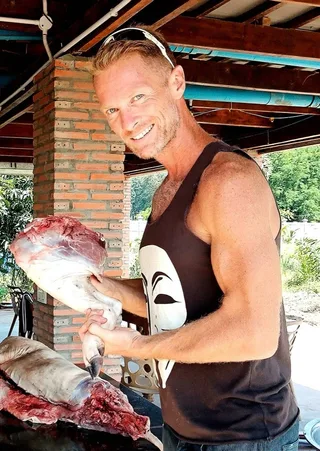
I'm Josh Galt III. I've farmed in British Columbia, Oregon, Cambodia, Malaysia, Mexico, and Costa Rica: goats, rabbits, and horses on our family's place in the west hills of Portland, sheep and grass-fed wild boar on an island in the Mekong, and a black soldier fly farm in Malaysia.
This year I went through about 1,100 farm listings for my own family's move back to Oregon. V-Farms is that search, written up: the best small grazing farms and homesteads I find, for sale, for lease, and caretaker deals.
V-Farms takes no money from sellers, developers, or brokers, and no commissions. Readers pay for the list, and that's all.
How it's sourced
The guide's figures come from 153 sources, linked at the end: Oregon State University, the USDA, peer-reviewed studies, the Oregon vineyard census, and the growers themselves. A figure or rule that holds only in Oregon is marked (Oregon), and US law is marked (US).
Checked October 2026. For a lease, an option, or a partnership, get an agricultural attorney and an accountant.
Before you sign up
- It's free
- No card and no trial. The guide is free for an email, and so are our other 2 guides.
- What you get
- The guide comes in the first email, as a web page and a PDF you can print. The same email points you to our other free guides. After that comes the free V-Farms weekly email.
- Your address
- We never sell it or share it. Every email has a one-click unsubscribe.
- One account
- Your email is also your V-Farms account. Sign in with a code any time to get the guides again.
- Who pays us
- V-Farms takes no money from sellers, developers, or brokers, and no commissions. Readers pay for the list, and that's all.
Get the free guide
How to farm a small vineyard, as a web page and a 31-page PDF: the vine's year, the animals in the rows, what can go wrong, and the money.
P.S. If you're looking at a farm with vines right now, start with part 10. Walk the rows with its checklist before you talk terms.
Josh Galt III
Check your inbox
It has your guide, and it points you to our other free guides. It comes from Venturopoly Farms. If it isn't there soon, look in spam or promotions, and move it to your inbox so the next ones land there too.